
A budgeting guide for Hong Kong parents
By Karen Richardson, Star Property Partners
Figures checked: 28 October 2026 · Academic year: 2026/27 · All amounts in GBP
The cheapest weekly rent isn't always the cheapest option. Compare the rent for the whole contract, then add anything that isn't included, and keep refundable deposits in a separate upfront-cash budget. For example, £247 a week for 38 weeks is £9,386 in rent, while £218 a week for 51 weeks is £11,118 — £1,732 more, even though the weekly rate is lower (University of Bath 2026/27 examples; the rooms differ, so this compares total commitment, not quality).
When you are helping your child choose accommodation from Hong Kong, a weekly room price can seem reassuringly straightforward. But it does not tell you how much the family will actually spend.
Start with the rent for the whole period you need, then add anything excluded. Keep refundable deposits in a separate upfront-cash budget. A cheaper weekly rate can cost more overall if you pay for more weeks.
This guide explains how to compare the figures without losing sight of what matters: a suitable home, a workable daily routine and a budget your family understands.
The examples below use published 2026/27 prices. They are reference points, not live availability or quotations for September 2027. The University had not published 2027/28 undergraduate accommodation prices when I checked on 28 October 2026, so check its prices page again before your child applies. Check the relevant academic year and your child's individual offer before committing.
What do the published university prices look like?
Here is a small selection from the University of Bath's undergraduate accommodation price list.
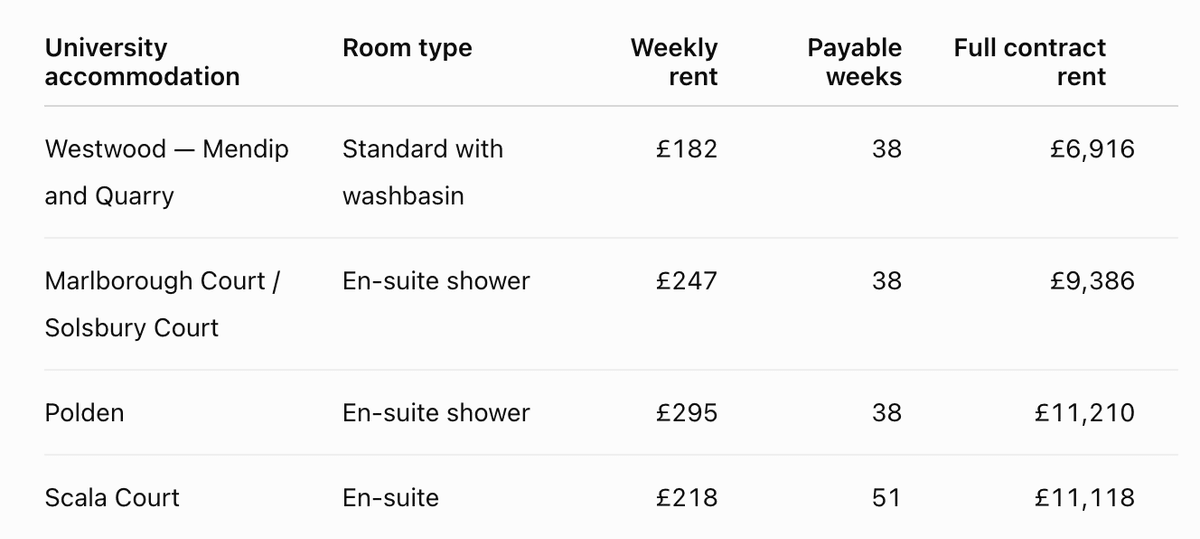
These are self-catered examples. The university lists utilities, Wi-Fi and contents insurance among its inclusions; check the room-specific details and insurance cover. Food, personal spending and other extras need their own budget. Sources: prices and inclusions.
Notice the difference between the two en-suite examples at £247 and £218 per week. The lower weekly rate leads to £1,732 more in total rent, because its contract covers 13 additional weeks. Those extra weeks may be useful if your child needs summer accommodation. If they will be home in Hong Kong, they may be less valuable to your family.
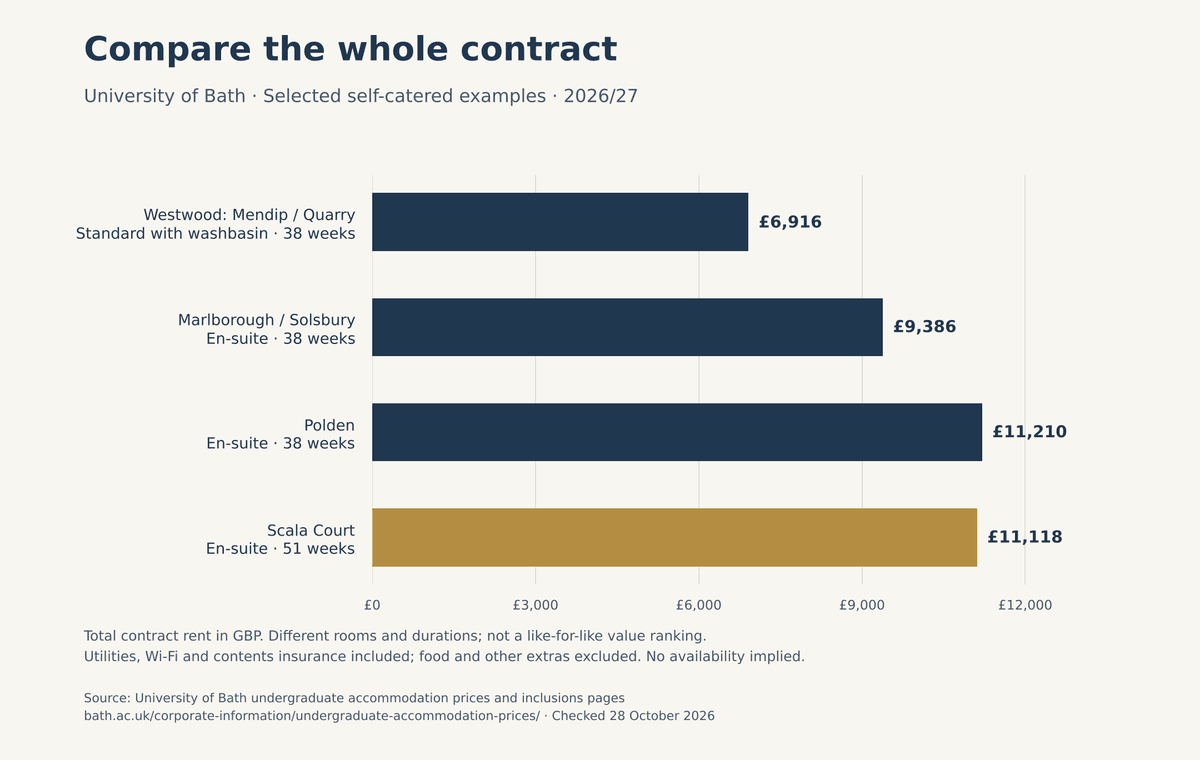
This is a comparison of total commitments, not a claim that the rooms offer the same facilities or experience. Eligibility and availability also matter.
Use the same questions for every option, but do not assume they all have the same type of agreement.
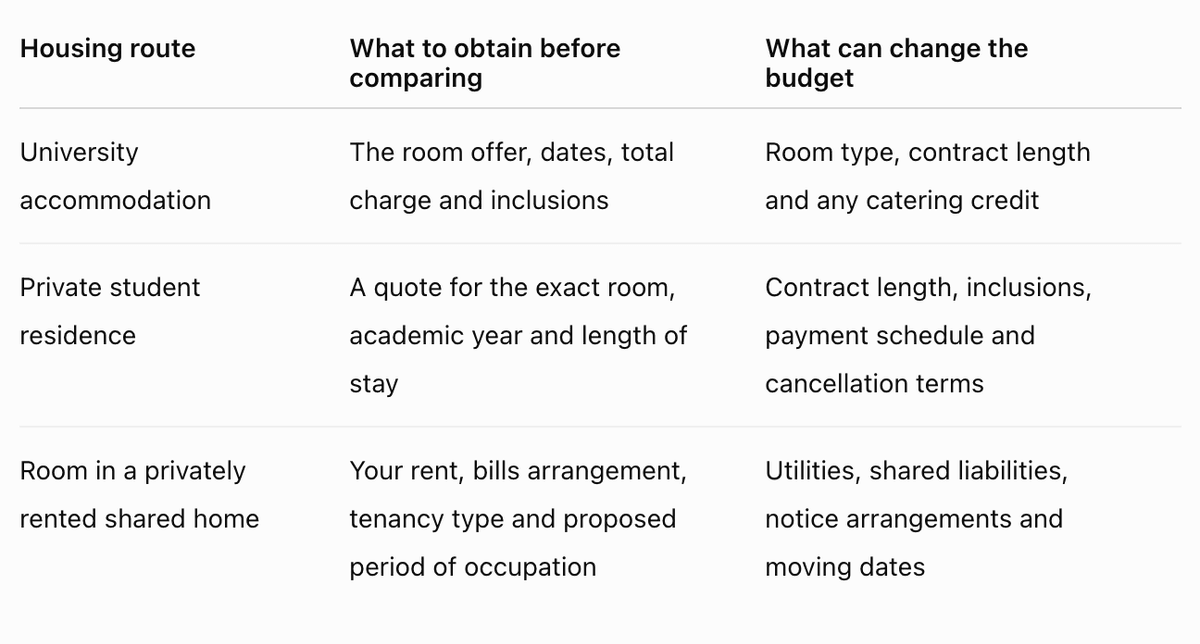
For example, Hello Student's James House advertises tenancy lengths from 44 to 51 weeks. Its Bath accommodation page lists included bills, Wi-Fi and contents insurance. Get a dated room quote rather than treating a headline or “from” price as your final cost.
For a shared house, establish whether the quoted rent is for one person, one room or the whole property. Ask how household bills and any joint obligations are allocated.
Current government guidance for student renters distinguishes ordinary private renting, where an assured periodic tenancy is likely, from university and qualifying private halls, which usually use a common law tenancy or licence. Do not assume every student rental is a fixed 12-month contract. The agreement and applicable rules determine how it ends.
A simple way to compare the full cost
For a fixed accommodation booking, use:
Weekly rent × payable weeks + compulsory extras + excluded housing costs = planned housing spending.
For a monthly or periodic tenancy, calculate rent over your planned stay using the actual monthly payments and notice requirements. Four weeks is not the same as a calendar month.
Here is a deliberately illustrative example, not a Bath property quote:
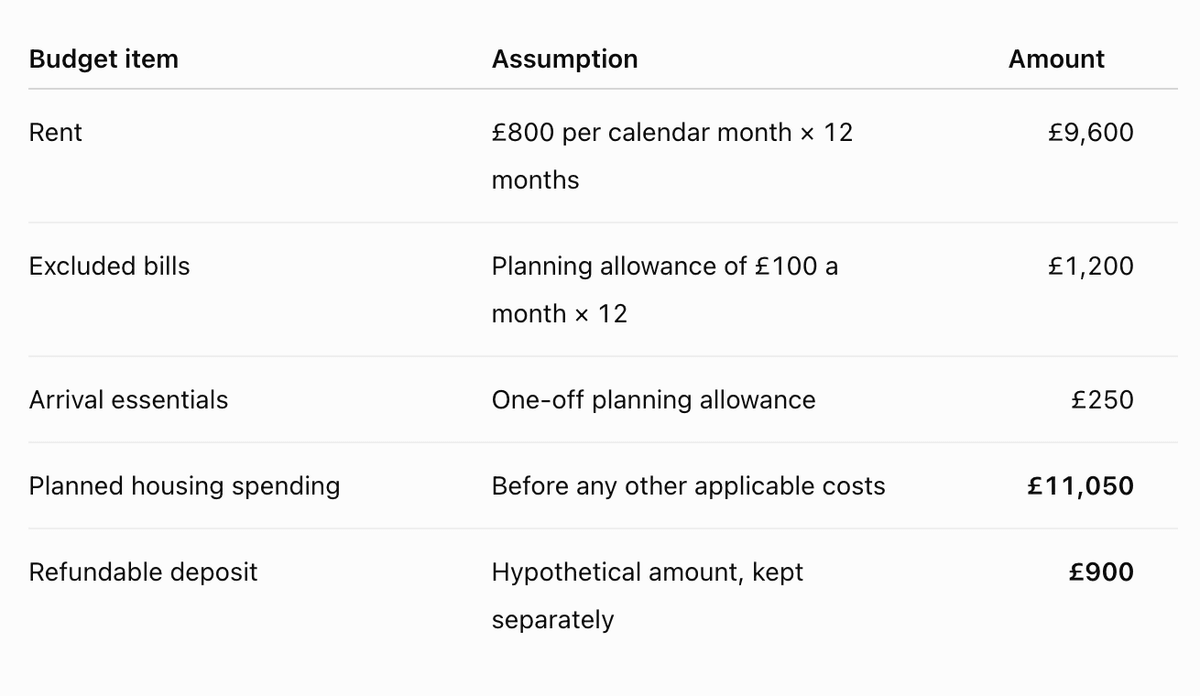
The allowances are chosen to demonstrate the calculation; they are not researched local averages or recommendations. Replace them with quotations and your child's needs. The £900 deposit is not included in spending because it may be returned, subject to the agreement and lawful deductions.
If two homes cover different periods, compare both their actual total commitments and the cost of covering your child's required dates. A shorter booking may need extra summer accommodation, storage or a second move. Extending a weekly rate on paper does not mean the provider will offer those extra weeks.

What else should you budget for?
Utilities and internet. Check electricity, gas where applicable, water and broadband separately. If bills are included, ask about any limits and exclusions. Avoid adding a second allowance for bills already covered.
Laundry. Access to laundry facilities does not necessarily mean free washing and drying. Check the actual arrangement for the building.
Bedding and arrival essentials. The university says bedding and linen are not supplied. Decide what your child will bring and what they will need to buy after arrival. Its inclusions page is a useful starting checklist.
Travel. Consider the journey to the University of Bath campus from the actual address, then price the travel your child expects to use. A city-centre address is not the same as living on campus. Include the journey home after evening activities as well as morning lectures.
Food. Keep groceries and eating out separate from housing spending. Where an accommodation offer includes Eat and Drink credit, check its value and use before adding a full food allowance on top. Credit is not automatically an all-meals package.
Other possible costs. Check contents-insurance exclusions, any applicable TV licence, storage between bookings and any council-tax position relevant to the household. Do not assume the words “student accommodation” answer every question.
For Hong Kong families, make the first comparison in pounds. Then calculate the Hong Kong dollar amount using your payment provider's rate and fees when you transfer, allowing for possible exchange-rate changes between instalments.
How much cash will you need upfront?
Keep two totals: what you expect to spend and what must be available before move-in.
Upfront cash may include an initial rent payment, a refundable deposit, travel and arrival purchases. Rent paid early is part of your rent total, not an extra cost.
The university's payment guidance says undergraduate students who do not pay in full pay in three instalments, with options depending on payment method. It separately specifies a £500 advance rent payment for postgraduates and returning undergraduates. Do not assume that payment applies to every new first-year undergraduate. Use the student's offer and payment schedule.
For an ordinary assured private tenancy in England, a landlord or agent cannot ask for rent before the tenancy agreement is signed (since 1 May 2026). After signing, they can usually ask for no more than one month's rent (or 28 days' rent if rent isn't paid monthly) before the tenancy starts. A tenancy deposit is capped at five weeks' rent where annual rent is below £50,000, and six weeks' rent where annual rent is £50,000 or more. A holding deposit is capped at one week's rent. As an illustration, at £200 a week the most a landlord could ask for as a tenancy deposit is £1,000 (5 × £200), and the most for a holding deposit is £200. If a holding deposit is credited towards rent or the tenancy deposit, count it once. See the government's tenant-fees guidance and rent-in-advance guidance.
Halls and qualifying private student residences can operate under different agreements. Confirm which rules apply rather than applying private-house assumptions to every booking. For University halls, check the payment and licence rules with the University directly.
If a guarantor is requested, ask what the provider accepts and obtain the terms before paying. Being based overseas does not mean you should assume a demand for many months' rent upfront is lawful. Star Property Partners is not a guarantor provider. For the viewing and agreement checks to make before you pay, see my guide to arranging Bath accommodation from Hong Kong.

Before your family commits, put these answers beside each option:
- Which academic year, room and student category does this price cover?
- What are the precise move-in and move-out dates?
- What is the total rent for the booking or planned stay?
- Which bills, facilities and food credits are included?
- What additional housing and everyday living costs remain?
- What is payable now, and on which later dates?
- Which payments are refundable, and on what conditions?
- What happens if the course offer or visa falls through, or plans change?
- Is a guarantor required, and what obligations would they accept?
- Does the location work for your child's daily university life?
A written comparison gives you something much more useful than a collection of weekly prices: a clear picture of the commitment and whether the home fits your child.
What if you are also considering buying?
Several years of rent can prompt the question, “Would buying make more sense?” It deserves a separate assessment of purchase and ownership costs, flexibility, risks and your family's longer-term plans. Rent alone cannot establish that buying is the better choice. Renting first may give your child time to settle and discover what suits them.
For the wider housing choices, see our Hong Kong parent's guide to where your child could live in Bath.
If buying is something your family is considering, you can explore buying a home in Bath or book a 30-minute introductory call with me. I can talk through your plans and explain how our Bath Property Concierge can help with finding and preparing a suitable home. You can see how I work with overseas families on my How we Work page.
Frequently asked questions
Is a lower weekly rent always cheaper?
No. Compare the total rent for the whole contract. For example, £247 a week for 38 weeks is £9,386 (247 × 38), while £218 a week for 51 weeks is £11,118 (218 × 51). The lower weekly rate costs £1,732 more overall because it covers 13 more weeks. These are 2026/27 University of Bath examples; the rooms differ, so the comparison is about total commitment, not quality or availability.
How much will I need to pay before my child moves in?
It depends on the accommodation, so use your child's own offer and payment schedule. For University of Bath undergraduates who don't pay in full, fees are paid in three instalments. The University also asks postgraduates and returning undergraduates for a £500 advance rent payment when they accept their contract. For a private tenancy in England, a landlord can usually ask for no more than one month's rent (or 28 days' rent if rent isn't paid monthly) between signing and the start date, plus a capped deposit.
What deposit can a private landlord ask for?
For a private tenancy in England, the tenancy deposit is capped at five weeks' rent where annual rent is under £50,000, and six weeks' rent where it is £50,000 or more. A holding deposit is capped at one week's rent. As an illustration, at £200 a week the most a landlord could ask for as a tenancy deposit is £1,000 (5 × £200), and the most for a holding deposit is £200. For University halls, check the deposit and payment rules with the University.
What is included in University of Bath accommodation prices?
The University says gas, electricity and water bills, high-speed Wi-Fi, contents insurance, laundrette access and a mail and parcel service are included. Bedding and linen are not supplied, and bedroom and kitchen screens do not come with a TV licence. Food, travel and personal spending need their own budget, and some buildings include Eat and Drink credit, so check the room details.
Karen Richardson runs Star Property Partners, providing local property support for overseas families considering a home in Bath. SPP is independent of the University of Bath.
Sources:
- https://www.bath.ac.uk/corporate-information/undergraduate-accommodation-prices/
- https://www.bath.ac.uk/student-accommodation/included-in-your-accommodation/
- https://www.bath.ac.uk/guides/paying-your-student-accommodation-fees/
- https://www.hellostudent.co.uk/student-accommodation/bath/james-house
- https://www.hellostudent.co.uk/student-accommodation/bath
- https://www.gov.uk/private-renting/student-tenancies
- https://www.gov.uk/guidance/tenant-fees-act-2019-guidance-for-tenants
- https://www.gov.uk/assured-tenancy-agreements-a-guide-for-landlords/rent-in-advance-and-deposits